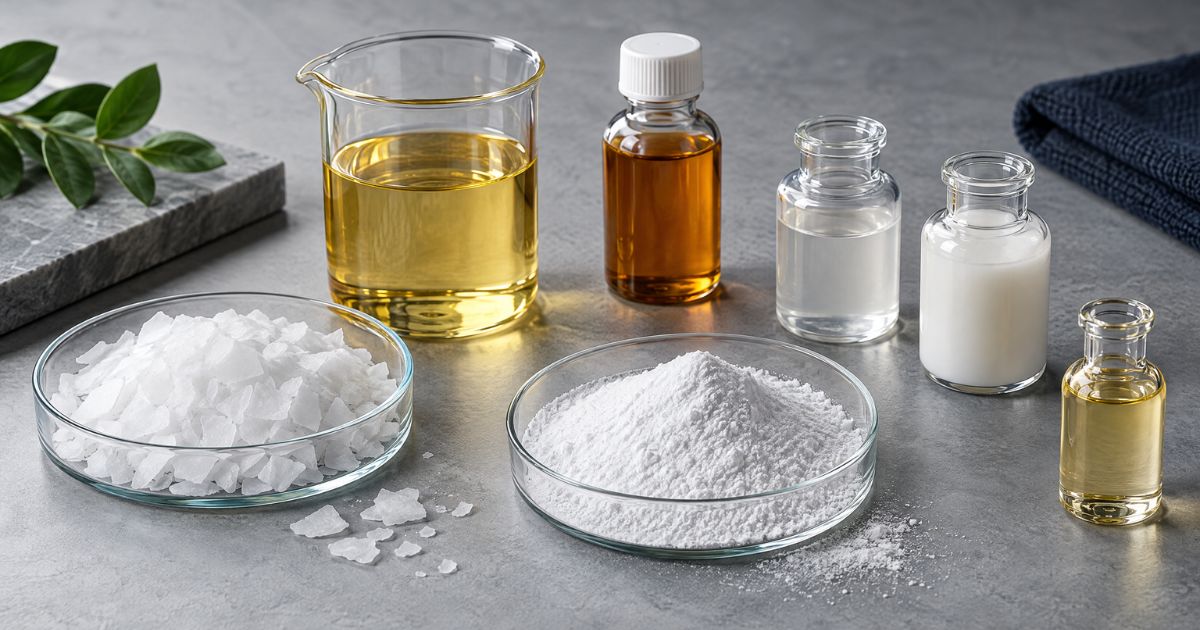
Every bar of soap and every sachet of detergent powder begins with a carefully chosen set of raw materials. The exact soap making chemicals list for any product depends on whether the manufacturer is producing traditional cold-process soap, a synthetic detergent bar, a laundry powder, or a liquid dishwash formulation. This guide covers the principal raw-material categories used across these product types, explains their functions, and outlines what procurement teams should verify before placing a bulk order.
Soap vs. Detergent: Why the Raw Materials Differ
Manufacturers often search for a single soap making chemicals list, but in practice, soap and detergent are chemically distinct product systems.
Traditional soap is produced through saponification — reacting a fat or oil with an alkali (typically caustic soda). The resulting sodium salts of fatty acids are the cleaning agents.
Synthetic detergent bars and powders rely on surfactants such as linear alkylbenzene sulphonic acid (LABSA) rather than saponified fats. They are formulated with builders, fillers, and other functional additives to work effectively in hard water.
Liquid dishwash and other cleaning formulations use different surfactant systems, co-solvents, and viscosity modifiers.
These product types use different ingredient systems, and the chemicals are not interchangeable. A manufacturer producing toilet soap needs fats, oils, and caustic soda. A detergent-bar manufacturer needs LABSA, soda ash, and sodium silicate. The practical table below covers the main categories across both systems.
Complete Raw Material Categories
| Category | Examples | Main Function | Common Application | Purchasing Notes |
| Oils & Fats | Coconut oil, palm oil, tallow, rice bran oil, castor oil | Provide fatty acids for saponification | Toilet soap, cold-process soap | Verify FFA content, iodine value, colour grade |
| Alkalis | Caustic soda (NaOH) flakes/lye, caustic potash (KOH) | React with fats to produce soap (saponification) | Bar soap (NaOH), liquid soap (KOH) | Confirm purity (≥98–99%), check membrane vs diaphragm grade |
| Surfactants / Detergent Actives | LABSA (acid slurry), SLS, SLES, AOS | Primary cleaning and foaming agents | Detergent bars, powders, liquid cleaners | Confirm active-matter percentage; LABSA typically 90–96% |
| Builders & Softeners | Soda ash (Na₂CO₃), STPP, sodium silicate, zeolites | Soften water, boost surfactant performance | Detergent powders, laundry bars | Check grade (light vs dense soda ash), silica ratio for sodium silicate |
| Fillers & Processing Aids | China clay, calcite, sodium sulphate, talc | Adjust weight, improve powder flow, reduce cost | Detergent powders, bars | Verify mesh size, moisture content, whiteness index |
| Binders & Structural Agents | Stearic acid, sodium CMC, starch | Provide hardness, bar integrity, tablet binding | Soap bars, detergent cakes | Check iodine value and acid value for stearic acid |
| Solvents & Hydrotropes | Water, sodium xylene sulphonate (SXS), ethanol | Dissolve actives, maintain clarity in liquids | Liquid detergents, liquid soaps | Confirm concentration and compatibility with surfactant system |
| Fragrances & Colours | Fragrance oils, essential oils, pigments, dyes | Scent and visual appeal | All soap and detergent types | Test stability in alkaline/acidic base; verify IFRA compliance for skin-contact products |
| Preservatives | DMDM hydantoin, phenoxyethanol, isothiazolinones | Prevent microbial growth in liquid formulations | Liquid soap, liquid detergent | Check permitted limits for intended market |
| Chelating Agents | EDTA (disodium/tetrasodium), sodium gluconate | Bind metal ions, prevent rancidity, improve lather | Soap bars, liquid cleaners | Confirm grade (cosmetic vs technical) and dosage range |
| Foam & Viscosity Modifiers | Cocamide DEA/MEA, CAPB, sodium chloride, guar gum | Boost foam, stabilise lather, adjust thickness | Liquid soaps, shampoos, dishwash liquids | Check active-matter percentage and pH compatibility |
| Other Functional Additives | Optical brighteners (e.g. Tinopal), enzymes, bleach activators (TAED) | Whiten fabrics, break down stains | Laundry detergents | Confirm enzyme activity, storage temperature requirements |
Not every ingredient above is needed in every formulation. A simple toilet soap may require only oils, caustic soda, water, fragrance, and a chelating agent. A heavy-duty laundry powder may draw from nearly every category.
Quality and Procurement Considerations
Before placing a bulk order for any soap or detergent chemical, procurement teams should evaluate the following variables :
• Chemical identity and commercial grade — ensure the supplier quotes the correct chemical (e.g. caustic soda flakes 98% vs 99%).
• Active-matter content or concentration — particularly important for surfactants such as LABSA (typically 90–96% active) and SLES (28% or 70% active).
• Purity and specification — request the supplier’s standard specification sheet and compare it with your formulation requirements.
• Solubility and compatibility — confirm the chemical is compatible with other ingredients in your formulation and dissolves correctly at your processing temperature.
• Packaging and storage — some chemicals (e.g. caustic soda flakes) are hygroscopic and require sealed packaging; others may need cool or ventilated storage.
• Shelf life — raw materials such as fragrances, enzymes, and vegetable oils have limited shelf lives and should be used within the recommended period.
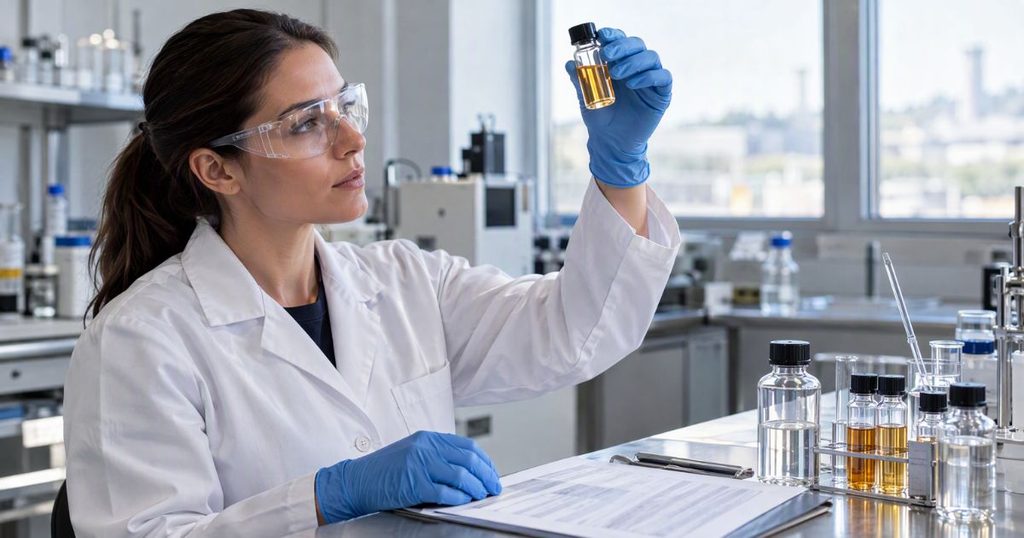
• Certificate of Analysis (COA) — request a batch-specific COA confirming key parameters (purity, active matter, moisture, colour).
• Safety Data Sheet (SDS) — the SDS provides hazard classification, handling instructions, PPE requirements, and first-aid information.
• Batch consistency — for production stability, suppliers should demonstrate batch-to-batch consistency, particularly for surfactants and fragrances.
• Minimum order quantity (MOQ) and sample evaluation — request a sample for lab testing before committing to bulk quantities.
Note : Active-matter content and concentration are not the same thing. A supplier quoting LABSA at 90% refers to the percentage of the active surfactant in the product; the remaining 10% is typically water and unreacted material. Always confirm what the percentage refers to.
How to Choose the Right Raw Materials
Selecting the correct chemicals depends on multiple factors that should be discussed with a qualified formulation chemist :
• Product type — toilet soap, detergent bar, laundry powder, or liquid cleaner?
• Cleaning performance required — heavy-duty stain removal vs mild skin cleansing.
• Skin-contact requirements — cosmetic-grade ingredients may be needed for personal-care products.
• Formulation compatibility — will the ingredient work with the other chemicals in your formula at the required pH and temperature?
• Water hardness in the target market — detergents need adequate builders to perform in hard-water regions.
• Cost constraints — balance between ingredient quality and production economics.
• Manufacturing equipment — some ingredients (e.g. spray-dried powders) require specialised plant.
• Intended market and regulatory requirements — BIS standards in India, EU regulations for exports, FDA requirements for the US market.
Checklist for your formulation chemist discussion : What is the target product profile? What are the must-have performance attributes? What are the regulatory constraints? What is the budget per unit? What equipment is available?
Common Procurement Mistakes
• Selecting chemicals by name or price alone — a low price may reflect lower purity, incorrect grade, or inconsistent supply.
• Confusing raw-material grades — technical-grade and cosmetic-grade chemicals differ in purity and permitted impurities.
• Ignoring compatibility — using a fragrance that destabilises in an alkaline soap base, or a surfactant that separates in hard water.
• Overlooking storage and handling — caustic soda absorbs moisture rapidly; improper storage can degrade the product.
• Skipping sample testing — always evaluate a sample batch in your production line before committing to bulk.
• Assuming one ingredient fits all formulations — LABSA is excellent for detergents but is not a substitute for saponification fats in traditional soap.
• Purchasing without reviewing the COA or SDS — these documents confirm the material meets your specification and is safe to handle.
Safety and Handling
Soap and detergent manufacturing involves chemicals that require proper safety precautions. Before handling any raw material, manufacturers should review the relevant Safety Data Sheet (SDS) provided by the supplier.
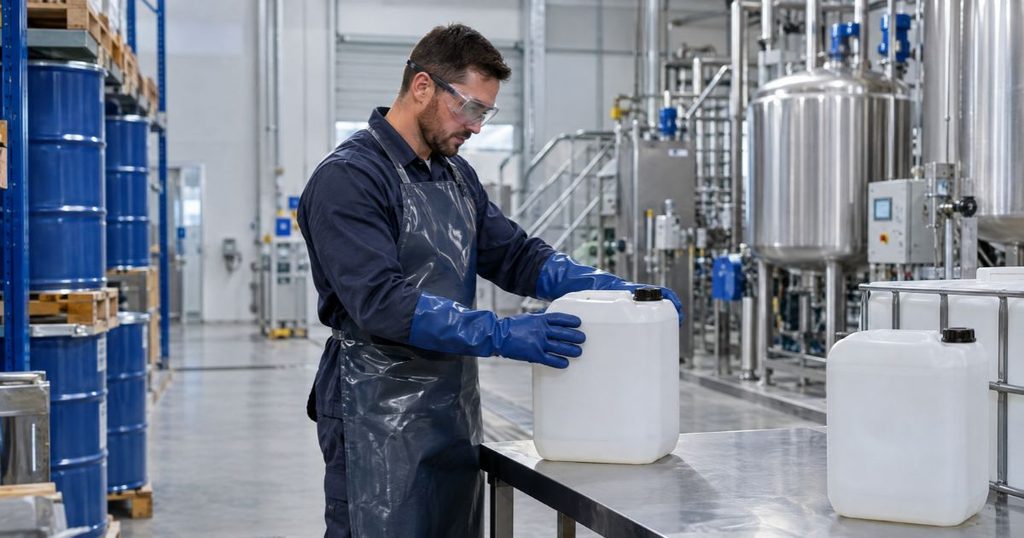
Caustic soda (sodium hydroxide) — whether in flake or liquid form — is strongly corrosive and can cause severe chemical burns on contact with skin, eyes, or mucous membranes. Appropriate personal protective equipment (PPE) including chemical-resistant gloves, safety goggles, and protective clothing is essential.
General safety considerations include :
• Store chemicals in their original containers with labels intact.
• Ensure adequate ventilation in the production area.
• Keep incompatible chemicals separated (e.g. acids away from alkalis).
• Train all personnel on emergency procedures, including spill response and first aid.
• Comply with local workplace safety regulations and OSHA or equivalent national standards.
This article is a purchasing reference and is not a substitute for qualified formulation advice, process-safety review, or regulatory compliance.
Bulk Purchasing and Supplier Evaluation
When requesting a quotation from a chemical supplier, provide as much detail as possible to get an accurate response. Use this checklist :
• Exact product name and grade (e.g. Caustic Soda Flakes, 98% min purity, membrane grade).
• Required specification and concentration.
• Quantity and preferred packaging (bags, drums, IBCs, tanker).
• COA and SDS availability.
• Sample approval before bulk order.
• Price, payment terms, and applicable taxes.
• Lead time and delivery requirements (ex-works, delivered).
• Storage and shelf-life requirements.
• Destination-market documentation (BIS certificate, REACH registration, or equivalent) where applicable.
FAQs :
Q1. What are the main chemicals used in soap making?
Traditional soap requires fats or oils (such as coconut oil, palm oil, or tallow), an alkali (caustic soda for bar soap or caustic potash for liquid soap), water, and optional additives like fragrances, colours, and chelating agents.
Q2. What is the difference between soap and detergent raw materials?
Soap is made by saponifying natural fats with an alkali. Detergents use synthetic surfactants like LABSA along with builders (soda ash, sodium silicate), fillers, and other functional additives. The two systems are chemically different and the ingredients are not interchangeable.
Q3. What is LABSA, and why is it used in detergents?
LABSA (linear alkylbenzene sulphonic acid), also called acid slurry, is an anionic surfactant widely used in detergent bars, powders, and liquid cleaners. It provides effective cleaning and foaming action and works well in both soft and hard water when combined with suitable builders.
Q4. Is caustic soda dangerous to handle?
Yes. Caustic soda (sodium hydroxide) is strongly corrosive and can cause severe chemical burns. Always wear appropriate PPE (gloves, goggles, protective clothing), work in a ventilated area, and review the Safety Data Sheet before handling.
Q5. How do I choose the right grade of a soap chemical?
The correct grade depends on your final product. Personal-care soap generally requires cosmetic-grade or pharmacopoeia-grade chemicals with higher purity. Industrial cleaning products may use technical-grade materials. Always match the chemical grade to your formulation requirements and the regulations of your target market.
Q6. Can I use the same raw materials for soap and detergent?
Some materials overlap — fragrances, colours, and water are common to both. However, the core cleaning agents differ. Soap uses saponified fats; detergents use synthetic surfactants. Using soap-grade fats in a detergent formula, or LABSA in a traditional soap, will not produce the intended product.
Source Your Soap and Detergent Chemicals
Selecting the right raw materials is the foundation of every successful soap or detergent product. Prioritise chemical identity, correct grade, batch-tested quality, proper documentation (COA and SDS), and a supplier who can support sample evaluation and consistent supply.
Satyasha Chemicals supplies soap and detergent compounds, fragrances, and essential oils for manufacturers across India. To discuss your specific requirements or request pricing on verified products :