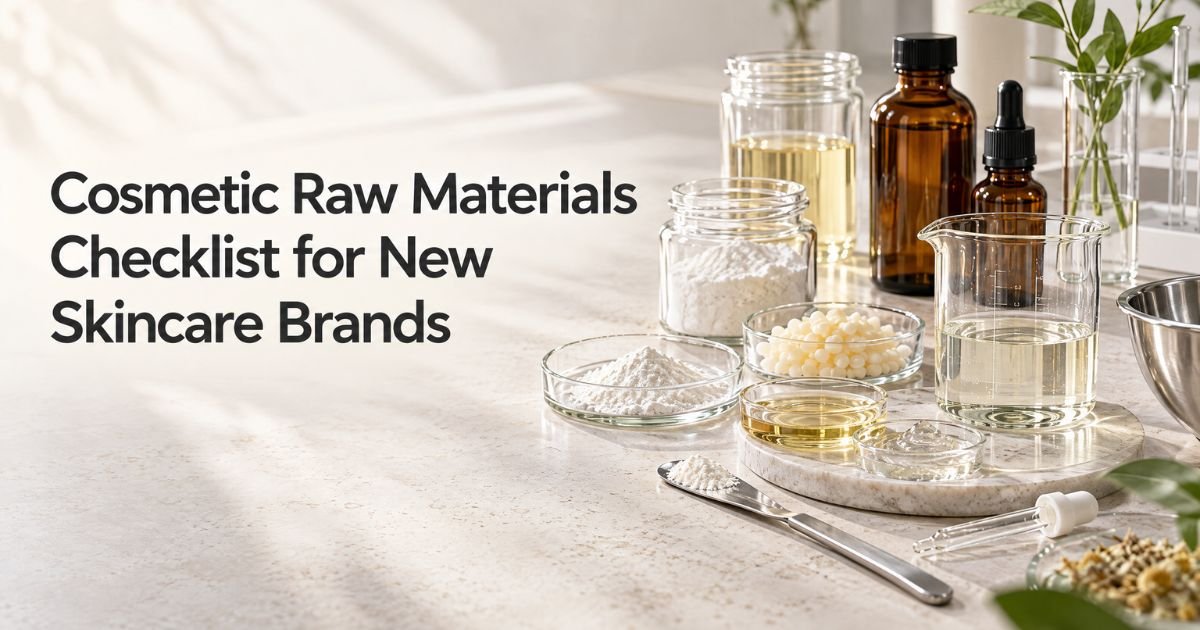
Launching a skincare brand begins long before the first label is printed. It starts with raw materials – the oils, emulsifiers, actives, preservatives, and specialty ingredients that become your finished product. For new founders, contract manufacturers, and procurement teams entering the cosmetic supply chain for the first time, knowing what to verify before placing a bulk order can prevent costly reformulations, failed stability tests, and regulatory delays.
This checklist covers the practical steps involved in evaluating and sourcing cosmetic raw materials. It is designed for skincare brands at the sourcing stage, not as a formulation guide or regulatory compliance manual. Ingredient sourcing and finished-product safety are separate disciplines, and each requires its own expertise.
Cosmetic Ingredient Categories You Need to Understand
Before contacting suppliers or comparing quotations, establish which functional categories your formulations require. Skincare products typically draw from several core groups of raw materials, and each group serves a different role in the finished product.
Base and Functional Ingredients
- Emollients and oils – provide skin-feel, barrier support, and spreadability. Examples include plant-derived oils (jojoba, sweet almond, argan), mineral oil derivatives, silicones (dimethicone), and esters such as isopropyl myristate.
- Emulsifiers – stabilise oil-and-water mixtures into uniform creams or lotions. Common types include cetearyl alcohol with ceteareth-20, polysorbate 80, and lecithin-based systems.
- Humectants – attract and hold moisture. Glycerin, hyaluronic acid, panthenol, and propylene glycol are widely used across product types.
- Surfactants – provide cleansing and foaming action in face washes, cleansers, and shampoos. Sodium laureth sulfate, cocamidopropyl betaine, and decyl glucoside are standard choices across different mildness profiles.
- Thickeners and rheology modifiers – control viscosity and texture. Carbomer, xanthan gum, hydroxyethylcellulose, and cetyl alcohol each produce different flow characteristics.
Active, Preservative, and Aesthetic Ingredients
- Active ingredients – deliver the product’s claimed benefit. Niacinamide, salicylic acid, retinol, vitamin C derivatives, alpha-hydroxy acids, and botanical extracts each have specific stability, pH, and concentration requirements.
- Preservatives – prevent microbial growth in water-containing formulations. Phenoxyethanol, ethylhexylglycerin, sodium benzoate with potassium sorbate, and parabens are commonly used systems. The choice depends on the formulation’s pH, water activity, and target regulatory market.
- Fragrances and essential oils – contribute scent and, in some cases, functional properties. Natural essential oils such as lavender, tea tree, eucalyptus, and rose require separate quality checks, particularly for allergen content and adulteration risk.
- Colorants and pigments – used in tinted products, sunscreens, and decorative cosmetics. Each colorant must be approved for the specific application (face, eye, lip) in the destination market.
- Waxes and butters – provide structure, occlusion, and texture. Beeswax, carnauba wax, shea butter, and cocoa butter are common across balms, creams, and stick formats.
Not every ingredient in these categories is suitable for every formulation, skin type, or regulatory market. A qualified formulator should evaluate ingredient selection based on the specific product’s requirements.
→ Explore cosmetic ingredients available through Satyasha : View Cosmetic Ingredients
Grade and Specification Verification
The term “cosmetic grade” means the material meets purity and safety standards appropriate for use in products applied to skin, hair, or nails. This is distinct from food grade, pharmaceutical grade, or industrial grade – and the distinction matters at the formulation level.
Before accepting a raw material into your supply chain, verify the following specifications against the supplier’s documentation :
- INCI name – the International Nomenclature of Cosmetic Ingredients name is the standardised identifier used on product labels worldwide. Confirm that the supplier’s INCI name matches the ingredient your formulator specified.
- Purity and assay – the declared purity percentage should appear on the Certificate of Analysis (COA), measured for the specific batch you receive.
- Physical parameters – depending on the material, these may include appearance, colour, odour, pH, specific gravity, refractive index, melting point, or viscosity.
- Microbial limits – total aerobic count, yeast and mould count, and absence of specified pathogens (such as Pseudomonas aeruginosa or Staphylococcus aureus).
- Heavy metal limits – arsenic, lead, mercury, and cadmium content, particularly for botanical extracts, clays, and mineral-derived ingredients.
- Residual solvents or pesticides – relevant for plant-derived ingredients and extracts.
A material labelled “cosmetic grade” without supporting documentation is a claim, not a guarantee. Always match the grade designation against actual test data.
Supplier Documentation : COA, TDS, and SDS
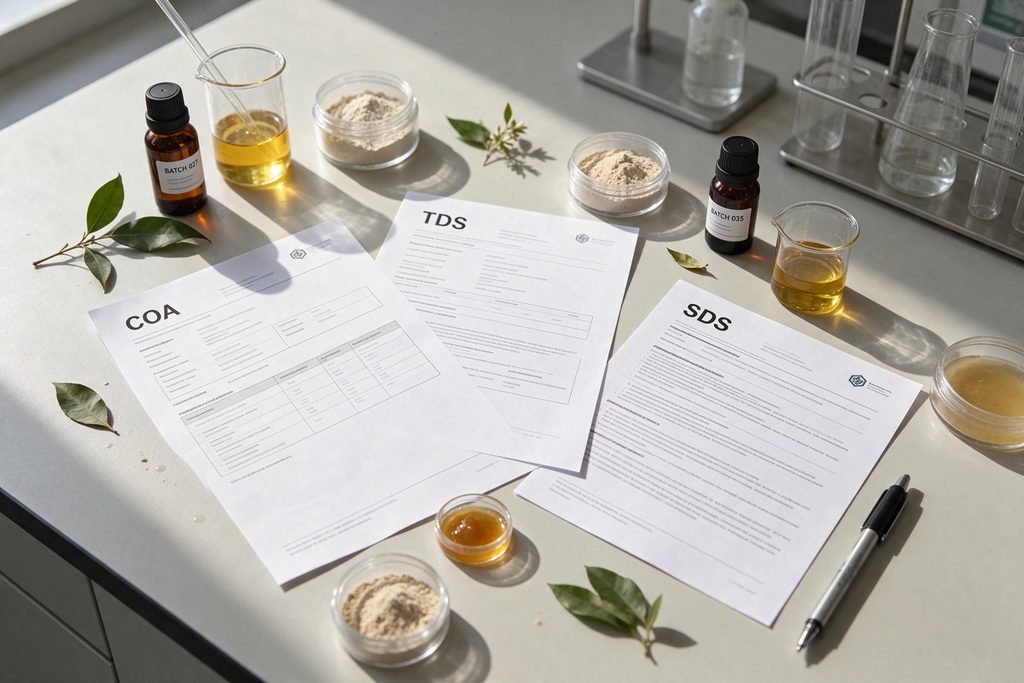
Three documents form the baseline of any cosmetic raw material transaction. Each serves a different function, and a reliable supplier should produce all three without delay.
Certificate of Analysis (COA)
The COA is the most important quality document. It reports actual test results for a specific production batch against defined acceptance criteria. A proper COA should include the batch or lot number, test date, test methods used, results for each parameter, and a pass/fail determination. Be cautious of COAs showing only “typical” values – these describe the material in general terms and do not confirm what is actually in the batch you are purchasing.
Technical Data Sheet (TDS)
The TDS describes the material’s physical and chemical properties, recommended usage levels, formulation guidelines, storage conditions, and application notes. It supports the formulator in understanding how the material behaves and where it fits within a given product type.
Safety Data Sheet (SDS)
The SDS covers hazard classification, handling precautions, storage and disposal requirements, first-aid measures, and transport information. It is a workplace safety and regulatory compliance document, not a quality assurance tool. However, it is legally required for the safe handling of chemical raw materials.
For essential oils specifically, a GC-MS (gas chromatography–mass spectrometry) report is an additional critical document for confirming identity and detecting adulteration. For more detail on essential oil quality evaluation, see our essential oils in cosmetics sourcing guide.
Composition, Compatibility, and Stability
Raw material quality alone does not guarantee a stable, safe finished product. How ingredients interact within a formulation determines whether the product holds together on the shelf and performs as intended on the skin.
Ingredient Compatibility
Certain raw materials are incompatible when combined. Cationic and anionic surfactants can neutralise each other. Some preservatives lose efficacy above or below specific pH ranges. Vitamin C (ascorbic acid) degrades rapidly in the presence of certain metal ions or at high pH. Niacinamide and direct acids can interact unpredictably at low pH in certain conditions.
Compatibility should be assessed during formulation development, not assumed from individual ingredient specifications. This is the formulator’s responsibility, but as a sourcing buyer, you should confirm that each material’s specifications (particularly pH, solubility, and stability profile) are compatible with your intended formulation.
Stability Considerations at the Ingredient Level
Some raw materials are inherently unstable under specific conditions. Retinol oxidises when exposed to air and light. Certain natural oils develop rancidity over time. Ascorbic acid discolours and loses potency rapidly in aqueous formulations without stabilisation.
Before sourcing, confirm :
- The material’s recommended storage conditions (temperature, humidity, light exposure).
- Its expected shelf life as a raw material (distinct from the finished product’s shelf life).
- Any known degradation pathways that could affect your formulation timeline.
Preservation and Microbial Safety
Any skincare product that contains water – and most do – requires effective preservation against bacteria, yeast, and mould. The preservative system is selected during formulation, but as a raw material buyer, you should understand the practical sourcing implications.
- Preservative efficacy depends on the formulation’s pH, water activity, and other ingredients. A preservative that works in one formulation may fail in another.
- Some markets restrict or prohibit certain preservatives. Parabens, for example, face regulatory limits in the EU (Regulation 1223/2009 Annex V) and are excluded by many “clean beauty” brand standards regardless of regulatory status.
- Preservative-boosting ingredients such as ethylhexylglycerin, caprylyl glycol, and certain organic acids are increasingly used alongside primary preservatives to reduce overall preservative load.
- Challenge testing (preservative efficacy testing) on the finished formulation is the only way to confirm that a preservative system actually works. This is a formulation-stage requirement, not a sourcing-stage one, but it underscores the importance of sourcing preservatives with consistent, documented efficacy data.
Packaging and Storage Requirements
Raw materials and finished cosmetic products have distinct packaging and storage needs. At the sourcing stage, confirm the following for each ingredient :
- Supplier packaging – is the material shipped in appropriate containers (amber glass for light-sensitive oils, HDPE drums for bulk liquids, sealed aluminium bags for hygroscopic powders)? Ask about inner liners and seals.
- Storage conditions – record the temperature range, humidity limits, and light-exposure restrictions stated on the TDS. Some actives and botanicals require cool storage (below 25°C); others need protection from moisture.
- Shelf life as raw material – this is not the same as the finished product’s shelf life. A raw material approaching its retest date may still be usable but should be retested before formulation.
- Packaging compatibility for finished products – certain ingredients (particularly acids, essential oils, and fragrances) can interact with specific packaging materials. HDPE, PET, glass, and airless pump systems each have different compatibility profiles. Your contract manufacturer or formulator should assess this during development, but sourcing the right container material is part of the supply chain.
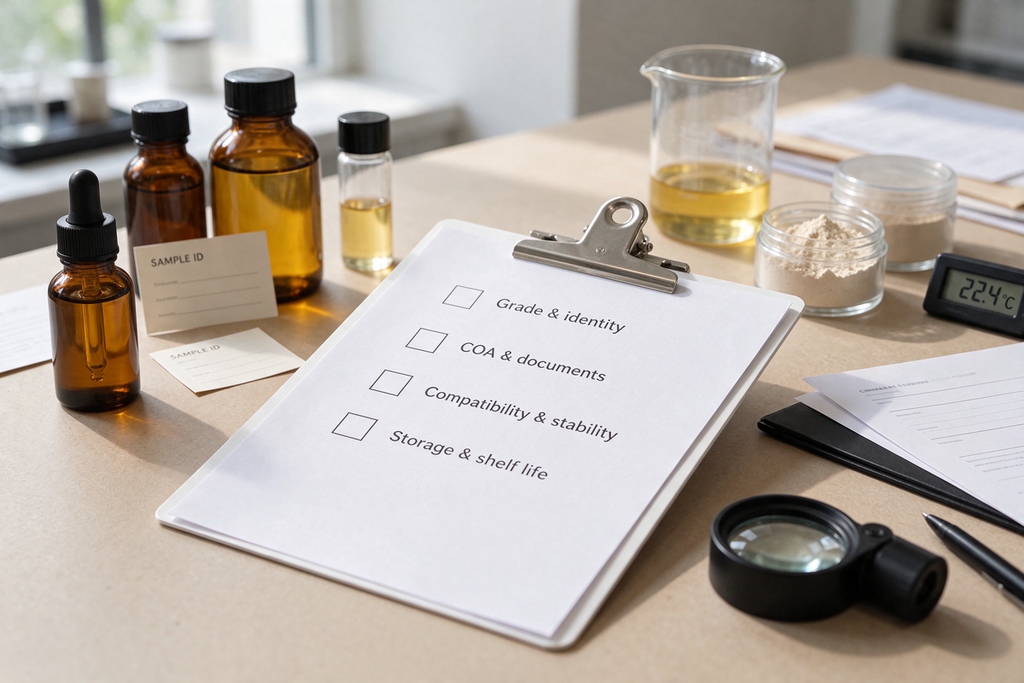
Pre-Purchase Verification Checklist
Use this checklist before confirming a cosmetic raw material order. Each item should receive a clear yes, no, or not-applicable determination.
Ingredient Identity and Grade
- INCI name confirmed and matches formulation specification
- Cosmetic grade clearly stated on supplier documentation
- Botanical name and plant part specified (for natural ingredients)
- CAS number confirmed where applicable
Quality Documentation
- Batch-specific Certificate of Analysis (COA) provided with actual test results
- Technical Data Sheet (TDS) reviewed for usage levels and formulation guidance
- Safety Data Sheet (SDS) available and current
- GC-MS report provided (for essential oils and botanical extracts)
- Allergen information documented where applicable
Purity and Safety Parameters
- Purity or assay percentage verified against specification
- Microbial limits tested and within acceptable range
- Heavy metal content tested (arsenic, lead, mercury, cadmium)
- Residual solvent or pesticide testing completed (for botanical ingredients)
Compatibility and Stability
- Material pH, solubility, and stability profile reviewed against intended formulation
- Known incompatibilities with other formulation ingredients identified
- Shelf life as raw material confirmed and within usable range
- Recommended storage conditions noted and achievable at your facility
Supplier Evaluation
- Supplier can trace each batch to its production and testing records
- Sample matches specification and meets formulation requirements
- Minimum order quantity, pricing structure, and lead time confirmed
- Supplier demonstrates awareness of destination-market regulations
Packaging and Logistics
- Supplier packaging is appropriate for the material type (light-sensitive, hygroscopic, volatile)
- Packaging compatibility between the raw material and the finished product’s container has been considered
- Transport and shipping conditions reviewed for temperature-sensitive materials
→ Looking for cosmetic-grade raw materials with documented quality? View Cosmetic Ingredients
FAQs :
Q1 : What is the difference between cosmetic grade and pharmaceutical grade raw materials?
A : Cosmetic grade materials meet purity and safety standards for products applied to skin, hair, or nails. Pharmaceutical grade materials meet stricter standards required for drug products, including tighter impurity limits and additional testing. A pharmaceutical-grade ingredient can typically be used in cosmetics, but a cosmetic-grade material cannot be substituted into a pharmaceutical product without requalification.
Q2 : What documents should I request from a cosmetic raw material supplier?
A : At minimum, request a batch-specific Certificate of Analysis (COA), a Technical Data Sheet (TDS), and a Safety Data Sheet (SDS). For essential oils and botanical extracts, also request a GC-MS report. For ingredients with specific certifications (organic, COSMOS-approved, halal), request copies of the relevant certificates applicable to the batch you are purchasing.
Q3 : How do I check if a cosmetic ingredient is permitted in my target market?
A : Regulatory frameworks vary by region. In the EU, Regulation 1223/2009 lists restricted and prohibited substances in its annexes. In the US, the FDA’s regulations under 21 CFR govern colour additives and certain prohibited ingredients, while most cosmetic ingredients are not subject to pre-market approval. In India, the BIS standards (IS 4707 series) and the Drugs and Cosmetics Act apply. Consult a regulatory specialist for your specific market and product type.
Q4 : What is ingredient compatibility testing, and when should it be done?
A : Compatibility testing evaluates whether raw materials interact negatively when combined in a formulation or when stored in specific packaging. It is typically conducted during product development by the formulator or contract manufacturer. Changes to any ingredient, supplier, or packaging material should prompt a new compatibility assessment.
Q5 : Should I source the cheapest available cosmetic raw material?
A : Price is one factor, but it should not be the sole criterion. Low-cost materials may have inconsistent purity, inadequate documentation, or unreliable supply. Comparing specifications, batch consistency, documentation quality, and supplier responsiveness alongside pricing gives a more complete picture of value.
Source Cosmetic Raw Materials with Confidence
Building a skincare brand on unreliable raw materials creates problems that surface in stability testing, regulatory review, or — worst — on the consumer’s skin. A disciplined sourcing process protects your formulations, your timelines, and your reputation.
Satyasha supplies cosmetic ingredients, essential oils, fragrances, and aromatic chemicals to skincare manufacturers, personal care brands, and contract manufacturers across India.