
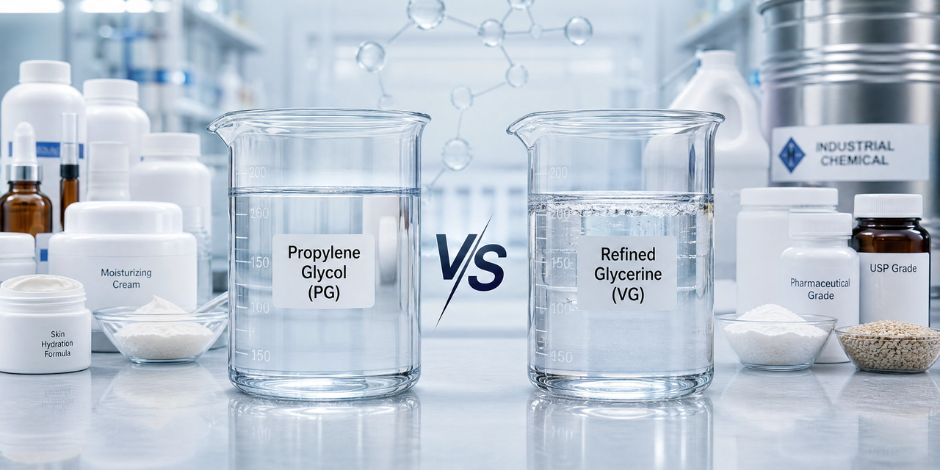
There are two transparent and viscous fluids on the table of a formulation chemist. Both have no odor. Both are colorless. Both are listed under the name ‘humectant’ on many composition charts. But using one of them in place of another may ruin the whole batch — affecting its performance or stability in unpredictable way.
This is the problem of confusion between propylene glycol and glycerine that occurs daily in many cosmetic, pharmaceutical, food and industrial companies. Two compounds look alike on paper. But they are different and cannot be used interchangeably in practice.
Satyasha Chemicals is a manufacturer of propylene glycol and pharmaceutical-grade, cosmetic and technical grade glycerine. Our company works directly with chemists that should choose which compound is better for their needs. This brochure will help you to understand all the difference between these substances and select the right one for your product.
What Is Glycerine?
Glycerine, which can be alternatively called glycerol, is a naturally occurring compound that is characterized by colorlessness, odorlessness, and high viscosity, having C3H8O3 chemical composition. Glycerine is commercially available in refined form that contains about 95 to 99.5% of glycerol. Much of the glycerol vs glycerin confusion buyers run into starts right here — the two words are simply different names for one compound, not two different ingredients.
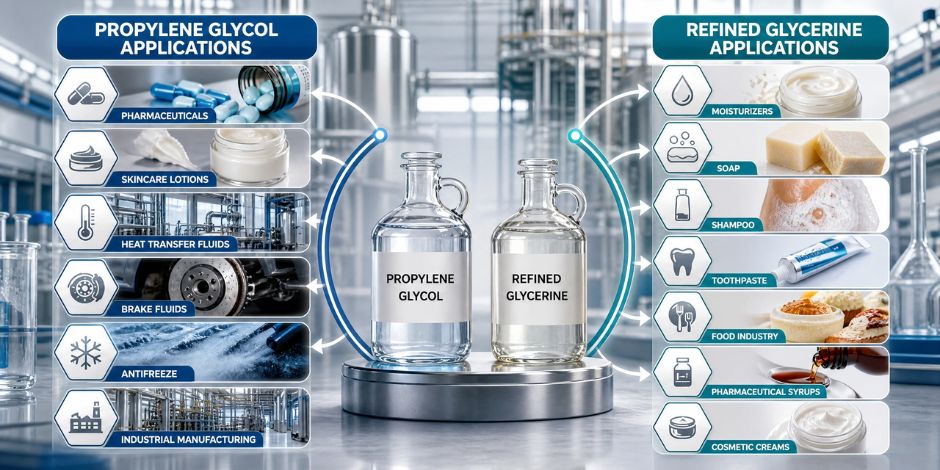
Glycerine is renowned for its excellent humectant nature: it pulls moisture from the air and retains it. That’s why glycerine forms the basis of moisturizers, shaving creams, soap, shampoo, and toothpaste, where hydrating and softening effect is desired.
Apart from being used in cosmetics industry, refined glycerine is utilized in pharmaceutical syrups, suppositories, and solutions taken orally, and also in food products as a sweetener and preservative. Glycerine possesses higher viscosity and higher boiling temperature in comparison with propylene glycol.
What Is Propylene Glycol?
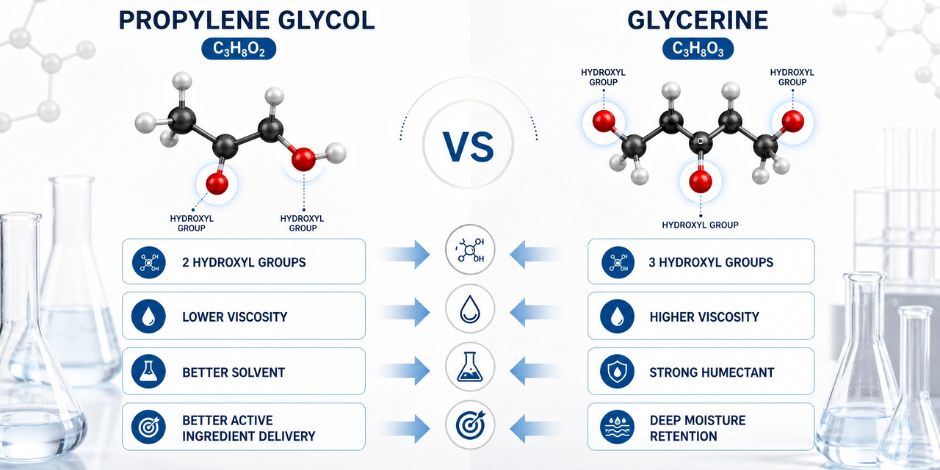
Propylene glycol is an organic compound that belongs to the diols group and has a molecular structure of C3H8O2, having one oxygen molecule lesser than glycerine.
Propylene glycol contains two hydroxyl groups whereas glycerine has three hydroxyl groups. The reduced hydroxyl groups in the former make it less viscous and provide it with a lower boiling point and increased solubility in water and alcohol. It may not have the moisture retention capacity of glycerine but it possesses one quality that glycerine doesn’t have: it does not disrupt the skin barrier and delivers the active ingredients of any composition efficiently.
Propylene glycol acts as a solvent and carrier in skincare ointments, lotions, medicines, and various industrial applications such as antifreeze, brake fluids, and heat transfer fluids.
Where Propylene Glycol and Glycerine Overlap
It is no wonder why the two become easily confused. Propylene glycol and glycerine have many physical properties which make them appear extremely similar in appearance in a laboratory setting.
• They are both clear, colorless, and odorless
• They have a sweet taste and viscous quality
• They act as humectants for formulation moisture retention
• They have a wide range of applications in cosmetics, pharma, foods, and industry
However, it is because they differ greatly in chemistry and application that their distinction becomes crucial. And to be clear, this overlap is strictly between propylene glycol and glycerine — a separate compound from glycerol. If you’ve ever asked “is glycerol the same as glycerine,” the answer is yes, so that overlap question never applies between glycerol and glycerine themselves, only between glycerine and propylene glycol.
Propylene Glycol vs Glycerine : The Core Differences
Chemical Structure
While glycerine has three hydroxyl groups, propylene glycol has only two. It is this chemical structure that forms the basis of any differences in the behavior of the substances – their viscosity, solubility in water, boiling temperature, and interaction with the skin. This is also where it helps to keep the glycerine vs glycerol comparison separate from the discussion at hand — that pairing is purely a naming matter, whereas propylene glycol and glycerine are genuinely distinct molecules with different hydroxyl counts.
Viscosity and Consistency
Glycerine is much more viscous compared to propylene glycol and does not dissolve well in water or alcohol. This property makes it perfect for preparations where a rich consistency is needed – cream, syrup, skin care products with high content of emollients. On the other hand, the liquid consistency of propylene glycol is what makes it suitable for preparation of light lotions, sprays and solutions that need to have high absorption properties.
Moisturising Effect versus Barrier Function
This difference is of most concern for formulators. Glycerine is a stronger humectant and provides for deep hydration while propylene glycol moisturizes skin less effectively but doesn’t compromise its barrier functions necessary for active delivery of ingredients into the skin.
Boiling Temperature and Stability
Another major difference in the properties of the two substances is the boiling point.
Choosing Between Propylene Glycol and Glycerine by Industry
Cosmetics and Skincare
For formulations requiring deep moisturisation – moisturisers, soaps, shaving cream – glycerine is usually more appropriate. For formulations where it is required to deliver active ingredients while not damaging the skin barrier or for light lotions and gels, propylene glycol is usually preferred. In many complex formulations, both substances are combined, using glycerine for moisture and propylene glycol for delivery.
Pharmaceuticals
Both substances are found in many formulations of drugs. Glycerine is used in syrups, solutions for oral application, and suppositories in cases where there is a need for sweetness and viscosity. Propylene glycol is used as a solvent for topically and orally administered drugs. The pharmaceutical grade purity for both substances is essential here. On certificates of analysis, the glycerin vs glycerol naming can also vary by region, so pharmaceutical buyers should confirm the actual compound and grade rather than going by label wording alone.
Food and Beverage
In confectionary and bakery products, glycerine is used as a sweetening, preserving, and consistency-modifying substance. Propylene glycol can be used as a food additive in certain applications due to its properties of a solvent in food colourants and flavourings.
Industrial Applications
Propylene glycol dominates here — used in antifreeze, brake fluids, heat transfer fluids, and as a base in various industrial processes. Glycerine finds industrial use primarily in plasticisers, lubricants, and as a humectant in manufacturing processes where its higher viscosity is an asset rather than a limitation.
E-Liquid and Vape Base Manufacturing
Propylene glycol and vegetable glycerine are foundational components in e-liquid bases, where the PG to VG ratio directly shapes the vaping experience. Higher propylene glycol concentrations deliver a stronger throat hit similar to traditional tobacco smoke, making it preferred among those transitioning from smoking. Higher glycerine concentrations produce denser vapour clouds with a milder sensation, favoured by cloud-focused users. Because the vapour produced comes into direct contact with the human respiratory system, pharmaceutical-grade purity in both ingredients is essential — not optional.
Why Manufacturers Source Both from Satyasha Chemicals
• Experience in dual products : We provide propylene glycol and pure glycerine in pharmaceutical, cosmetic, food and technical grades – which means that there is no need to source from different suppliers the related raw materials.
• Purity guaranteed per batch : Each batch is extensively analyzed with certificates provided.
• Assistance in choosing the right ingredient : The technical specialists will assist in the selection of the required ingredient, its grade and the quantity needed.
• Consistent quality regardless of the volume : No matter if it is a trial or a full tanker – the quality control process remains the same.
• Documentation available : All the necessary documents (MSDS, COA) are provided before placing an order.
Quick Decision Guide: Propylene Glycol or Glycerine?
If you like to retain moisture, have a thicker feel, or the natural positioning of products like soap, syrup and high-end moisturizer, then glycerin is the way to go.
So if the efficient delivery of active ingredients, integrity of the skin barrier, a thinner formulation or industrial fluids with low viscosity and low boiling point requirements are important to you then the choice would be propylene glycol.
When formulators need a glycerin substitute for cost savings, a lighter texture or better delivery of active ingredients, propylene glycol is often the ingredient of choice, as long as the application isn’t dependent on the superior humectant strength of glycerine.
If you are unsure, both components have been used in a number of very successful formulations in the cosmetics, pharmaceutical and e-liquid industries.
Get the Right Ingredient, Every Time
Whether your requirement is for propylene glycol or refined glycerine or an exact combination of both, Satyasha Chemicals offers pharmaceutical grade, cosmetic grade and technical grade products to meet your production requirements.
Our technical experts can assist you in choosing the appropriate grade and ratio of the product for your specific application – with documentation and bulk supply.
Propylene Glycol – Contact us at Satyasha Chemicals for a bulk quotation today!