
Light vs Heavy Liquid Paraffin : Differences & Applications
Ask five different suppliers for liquid paraffin and you may find five different products – one thin and almost like water, another so viscous it clings to the side of the container, and more rarely a clear label telling you whether it’s the light grade or the heavy grade. This uncertainty is no small inconvenience to manufacturers of pharmaceuticals, cosmetics, food processing and industrial lubrication. The wrong grade of liquid paraffin can compromise the texture of the product, its shelf life, the performance of the machines, or even its regulatory compliance.
Satyasha Chemicals provides light and heavy liquid paraffin for pharmaceutical, cosmetic, food and technical grades and the questions that keep arising from buyers are What is the real difference between light and heavy liquid paraffin? And what grade does a given formulation or process really demand? This guide makes that crystal clear so your next order is the first one right.
What Is Paraffin?
But, before we get to compare the two grades, it might be worth finding out what paraffin is. The term paraffin has been used to refer to a variety of saturated hydrocarbon compounds, which are chemically referred to as alkanes, that have been derived through the refining process of crude petroleum. The classes of paraffins are at the two extremes of a spectrum simply in terms of the length of the carbon chain of the compound, long chains to form solid paraffins as in wax candles, others to form liquid paraffins when the chains are of moderate lengths. All kinds of paraffin have some features in common, they are chemically inert, colorless, odorless, and highly resistant to oxidation.
What Is Liquid Paraffin?
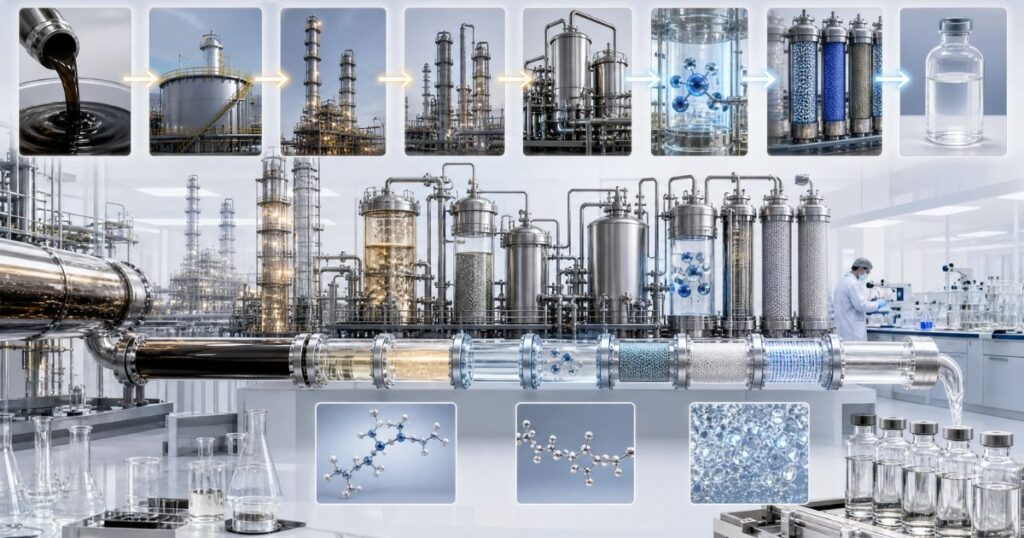
So, what is liquid paraffin exactly? Liquid paraffin is a highly refined, colourless and virtually odourless mineral oil. It is made by distilling and purifying selected fractions of crude petroleum. Liquid paraffin is chemically stable and relatively inert with other substances, unlike vegetable or synthetic oils. It also doesn’t go rancid — exactly what you want in a base ingredient for products that are expected to sit on the shelf for extended periods of time.
Based on viscosity and density, liquid paraffin is broadly classified into two categories, light liquid paraffin and heavy liquid paraffin. They both come from the same refining process, but the degree of refining and the length of the hydrocarbon chains retained will determine what grade the batch ends up as, and therefore what applications it is best suited for.
Light Liquid Paraffin vs Heavy Liquid Paraffin : The Core Differences
Viscosity and Density
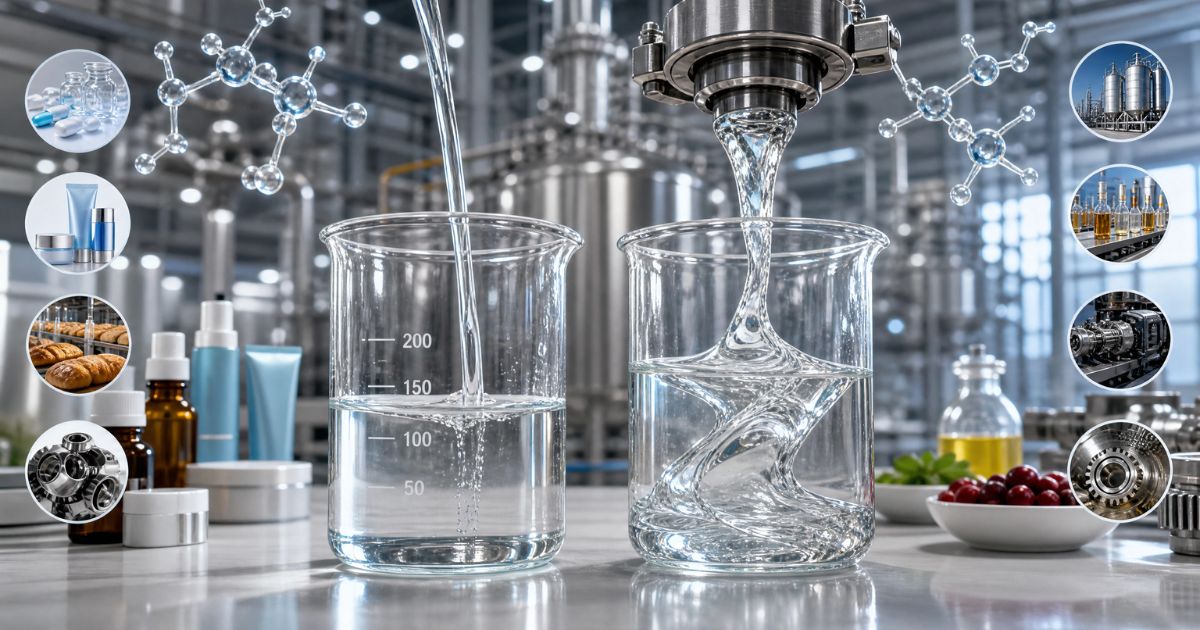
The most obvious difference between the two grades physically is thickness. The light liquid paraffin is less viscous and has less density. It is generally between 0.83 to 0.86 g/cm3 in density and is thin and flows easily. Heavy liquid paraffin has a higher density, typically between 0.875 and 0.905 g/cm³, and a noticeably thicker, oil-like consistency. That one property largely dictates for which formulations or industrial processes each grade is best suited.
Volatility and Odour
Light liquid paraffin, made up of shorter hydrocarbon chains, is somewhat more volatile and tends to evaporate a little faster than its heavier counterpart. Heavy liquid paraffin, built from longer chains, is far less volatile and stays in place on surfaces and within formulations for much longer — a property valued in industrial lubrication and long-lasting protective coatings.
Purity and Refining Grade
Both light and heavy liquid paraffin are available in technical, cosmetic, food, and pharmaceutical grades, though the refining intensity varies by intended use. Pharmaceutical-grade liquid paraffin, whether light or heavy, goes through stricter purification to strip out aromatic hydrocarbons and trace impurities, so the finished oil meets pharmacopoeial standards for both internal and topical use.
Applications by Industry
Pharmaceuticals
Light liquid paraffin is frequently used in pharmaceutical formulations as a mild laxative, as an ophthalmic lubricant and as a base for lighter ointments and topical preparations. Heavy liquid paraffin is preferred for denser ointment bases, wound dressings and protective skin-barrier formulations. Its thicker consistency is used where a longer-lasting film on the skin is desired.
Cosmetics and Personal Care
Cosmetic makers embrace light liquid paraffin in baby oils, facial serums and lightweight lotions where fast absorption and non-greasy after-feel are most important. You’ll find it in richer creams, balms and petroleum-jelly type products where the aim is to create a rich, occlusive barrier that locks moisture in for hours.
Food and Food Processing
Liquid paraffin, both light and heavy, is utilized in food products for applications such as release agents, polishing, and protective coatings in bakeries, confectioneries, and fruit processors. Light liquid paraffin is more often used for glazing surfaces and light lubrication of food-related machines, whereas heavy liquid paraffin is selected where there is a need to create a more persistent film for packaging purposes.
Industrial and Technical Applications
Here is when heavy liquid paraffin plays its true role as a lubricant, rust inhibitor, and processing agent in the textile industry, metal working, and mold releasing operations. Light liquid paraffin finds application in lubrication of machines that require less viscous oil, in ink preparation, and as carrier fluid in processes where lower viscosity becomes an asset. Technical users often maintain various grades of paraffin oils in their inventory since various process steps need certain flow characteristics.
Choosing Between Light and Heavy Liquid Paraffin
If the desired effect of the preparation is quick absorption, low viscosity, or light finish, then the use of light liquid paraffin will be most appropriate. In case if there is a need for lubricity with a prolonged effect, a protective layer, or evaporation prevention, it is recommended to use the heavy liquid paraffin. Quite often, in many cosmetic and pharmaceutical companies, the two varieties of this substance are used in combination with each other.
Why Source Liquid Paraffin from Satyasha Chemicals
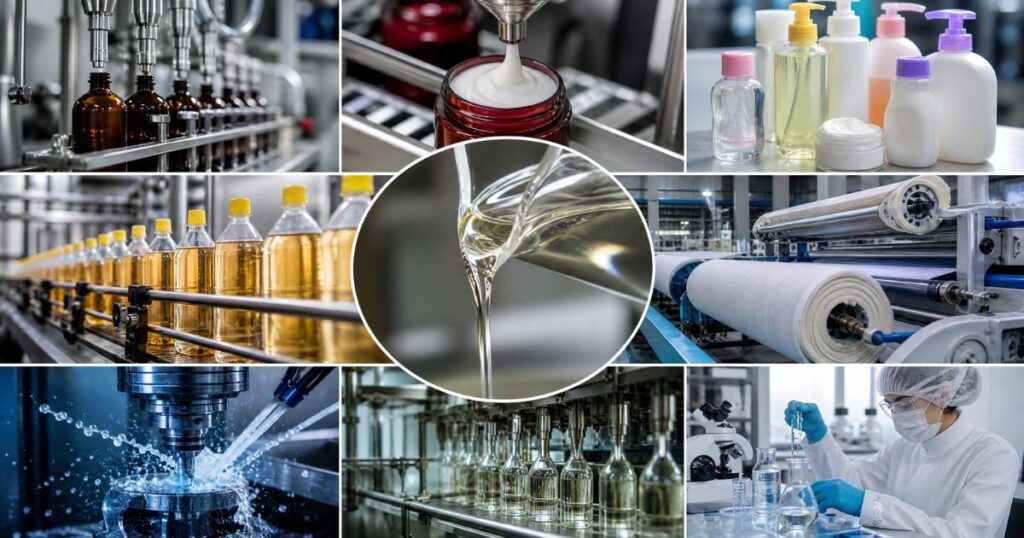
- Expertise in all grades : We have both light and heavy grades of liquid paraffin available in all the different types of grades like pharmaceutical, cosmetic, food, or technical grades – one supplier to meet all your requirements.
- Consistent purity in each batch : Each of our batches comes with a certificate of analysis to ensure that the product matches its label.
- Applications support : Our technical experts help choose the correct grade, viscosity, and ratio of the mix according to the product or process.
- Flexible order quantities : Regardless of how large or small your order may be, our quality control measures never vary at all.
- Detailed documentation : MSDS and COA are provided before you even place an order.
Get the Right Grade of Liquid Paraffin, Every Time
Whatever may be the need, be it for light liquid paraffin, heavy liquid paraffin, or a special mixture of both, Satyasha Chemicals offers consistent quality in each batch. Contact us today to get your bulk quotation done and also help in choosing the right liquid paraffin that suits your requirements.
Liquid Paraffin — Get your bulk quotation done by contacting Satyasha Chemicals today!
FAQs :
Q1 : In what way do light liquid paraffin and heavy liquid paraffin differ?
A : Light liquid paraffin is more fluid and less dense (0.83–0.86 g/cm³), whereas heavy liquid paraffin is more viscous and denser (0.875–0.905 g/cm³).
Q2 : Is there an option to combine light and heavy liquid paraffin in the same formula?
A : Yes, many cosmetics and pharmaceutical companies use both grades in their formulas. The technical experts at Satyasha Chemicals will provide you with advice on how to proportionate them.
Q3 : Which one of the two is used in making baby oils and lotions?
A : Light liquid paraffin is typically used for baby oils and lotions since it is quickly absorbed without leaving greasy residue behind.
Q4 : Is liquid paraffin safe for use in the food industry?
A : Yes, food grade liquid paraffin is safe for use and it serves as a release agent and glazing coating for food products. Light grade is suitable for surface glazing, while heavy grade ensures more persistent barrier.
Q5 : What will help me decide whether I need light or heavy grades for my industry?
A : Light Liquid Paraffin is used when fast absorption and low viscosity is required, while Heavy Liquid Paraffin offers excellent lubricating and protective properties. Satyasha Chemicals experts will help you find out the right grade for your requirements.